Wall buttons and wiring
A dead wall control, intermittent button response, or a loose connection at the opener can stop everything. We test the control circuit and repair or replace the bad component instead of guessing.
Serving Lake City, Florida & surrounding areas
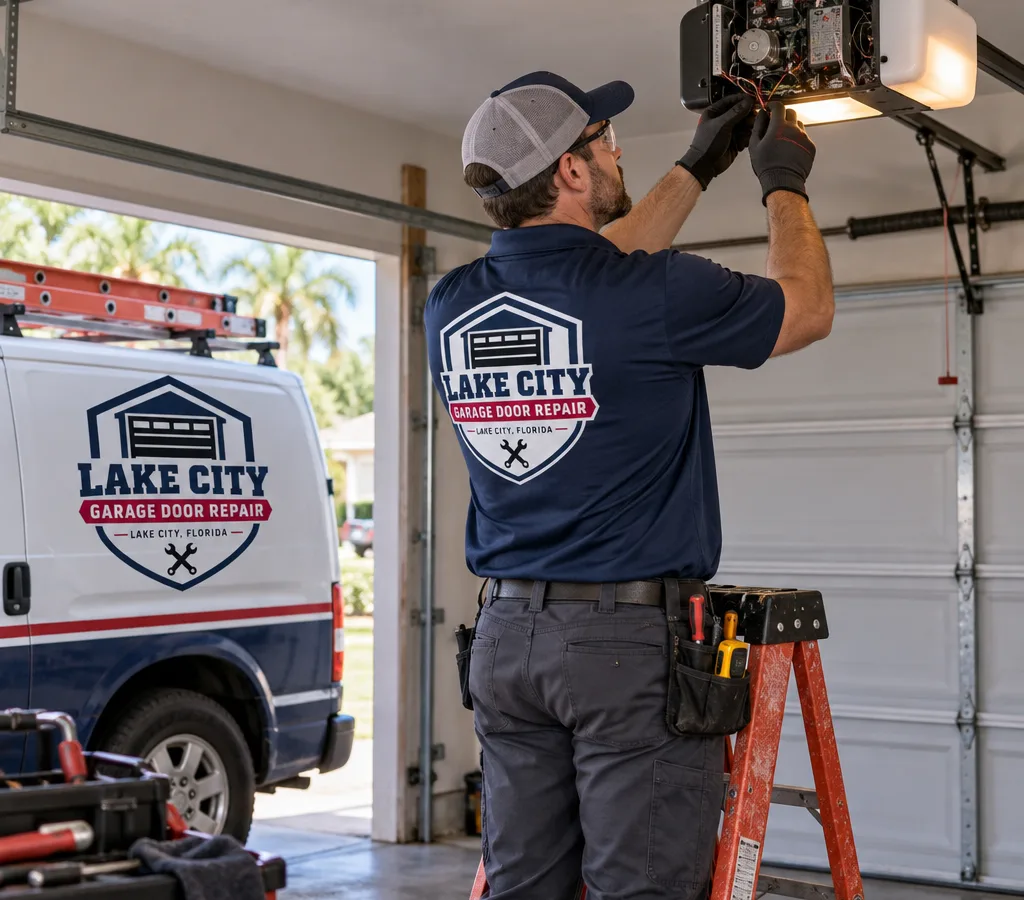
Garage door opener service in Lake City, Florida
When the opener quits, you need safe, reliable access again. Lake City Garage Door Repair troubleshoots the real cause, explains the fix, and restores smooth operation for remotes, wall controls, sensors, and the opener motor.
Diagnosis before repair
If you searched for garage door opener repair Lake City FL, you are probably dealing with a door that will not open, will not close, reverses for no reason, or only works sometimes. The fast fix is not always the right fix. A bad remote battery can look like a dead opener. A misaligned safety sensor can mimic a motor problem. A door that is binding on the tracks can make a perfectly good opener act like it is failing.
Lake City Garage Door Repair approaches opener problems the way a trades pro should: start with safety, confirm what is failing, and repair what is actually causing the trouble. That means checking the basics (power, wall control, lock/vacation settings), then moving into the parts that commonly fail (sensors, gear and sprocket, capacitor on some units, RPM/travel sensors, logic board, wiring, and the opener's force and travel settings). We also pay attention to the door itself, because an opener is only as reliable as the door it is trying to move.
If you need a broader fix beyond the opener, you can also get help through garage door repair in Lake City for issues like sticking doors, noisy rollers, or track problems that can overload an opener.
Complete opener troubleshooting
A dead wall control, intermittent button response, or a loose connection at the opener can stop everything. We test the control circuit and repair or replace the bad component instead of guessing.
When remotes suddenly stop working, the problem can be programming, a failed receiver, or interference. We verify signal and pairing, then restore reliable operation.
If the door starts down and reverses, or the opener lights flash, sensors are often the reason. We align, secure, and test photo eyes so the door closes safely.
Stripped gears, worn sprockets, weak capacitors (on some models), and failing motors can create noise or a door that barely moves. We pinpoint the failure and explain the repair clearly.
Doors that stop short, slam the floor, or bounce back often need correct limit and force adjustments. We set them so the door closes firmly without excessive force.
Loose chains, worn belts, and dry or damaged screw drives can cause jerky movement and noise. We inspect the drive system and correct tension, wear, or alignment issues.
Recognize the likely cause
Opener trouble usually comes down to a few repeatable patterns. Here is what customers around Lake City most often describe, and what it typically points to:
Lake City's heat and humidity also matter. Sensors and wiring connections that are already marginal can become intermittent with moisture and corrosion, and older garages sometimes have wiring that has been bumped, stapled too tight, or spliced over the years. We look for those practical causes during troubleshooting so the opener does not fail again next week.
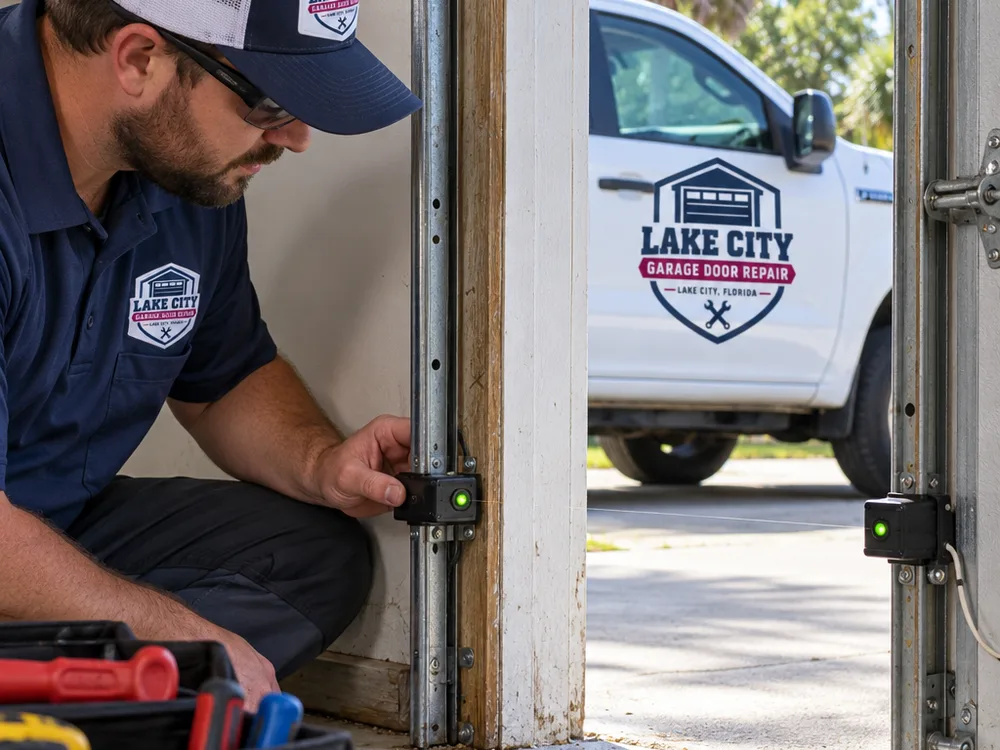
A controlled five-step process
Step 1 of 5
We start by confirming the door can move safely and that springs, cables, and rollers are not creating resistance that could damage the opener.
Step 2 of 5
We test the outlet, opener power head, wall control circuit, remotes and keypad operation, and the photo-eye safety system to isolate the failed component.
Step 3 of 5
If needed, we inspect wear items such as gears, sprockets, drive components, and internal switches or sensors that affect travel and motor control.
Step 4 of 5
You get a straightforward explanation of what failed, what we recommend repairing or replacing, and what you can expect after the fix.
Step 5 of 5
After repair we set travel and force correctly, verify safe reversing behavior, and test operation from the wall button and remotes.
Precise troubleshooting
From calibration and worn gears to a disconnected trolley, small details often explain why an opener stops working properly.
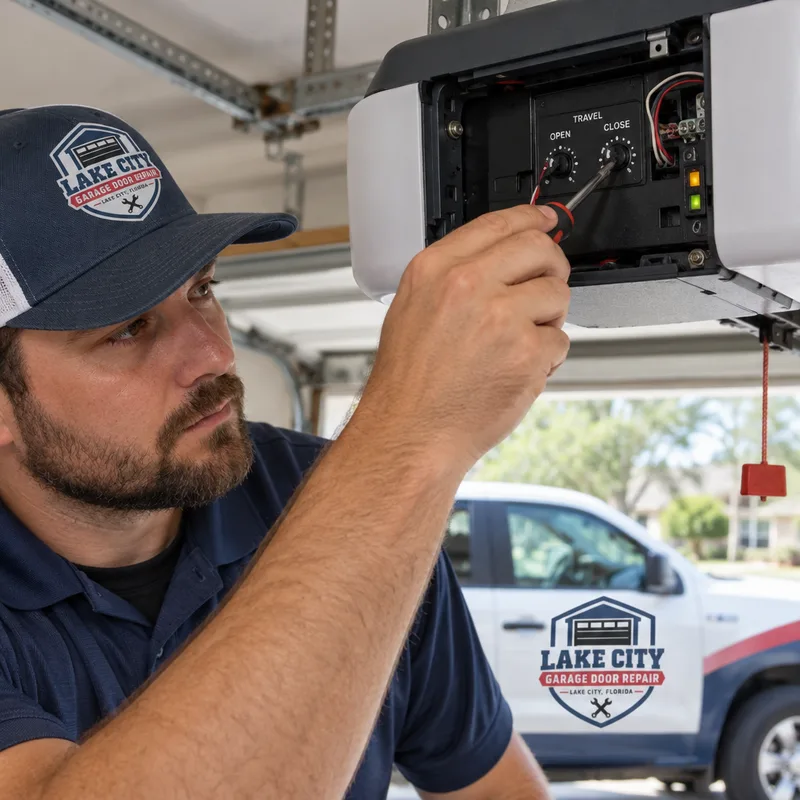
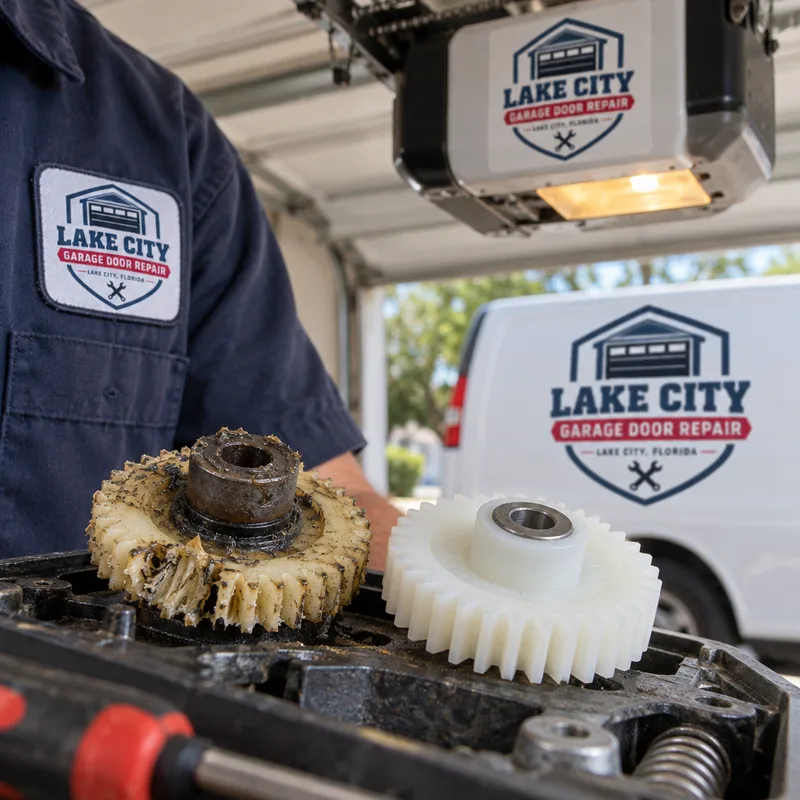
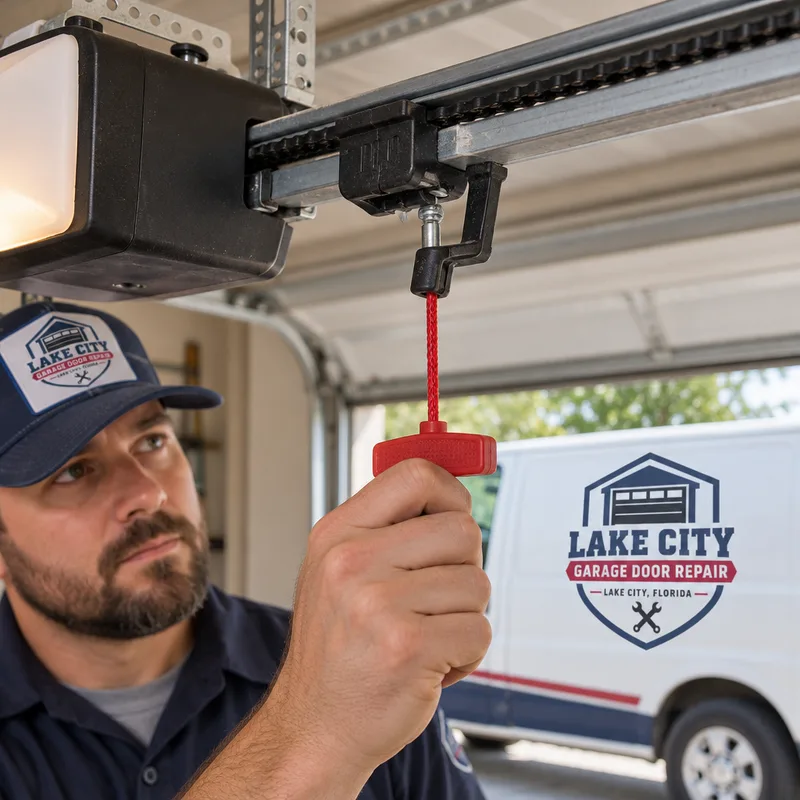
If your opener is unreliable or the door is stuck, getting it inspected sooner helps prevent burned-out motors, stripped gears, and a door that becomes unsafe to operate by hand.
CALL NOW: (386) 515-7354Practical opener answers
Understand common reversing, sensor, drive, and motor problems, and when it is safer to stop using the opener.
Yes. An opener that will not close is often caused by misaligned photo-eye sensors, an obstruction in the sensor path, or travel and force settings that need to be reset. We test the safety circuit first, then confirm the door moves freely so the opener is not fighting a mechanical problem.
That reversal is usually the opener's safety system reacting to resistance or a sensor issue. The most common causes are sensor misalignment, incorrect travel limits, or a door that is binding on rollers or tracks and triggering the opener's force limit. The fix depends on which of those tests out during inspection.
If the motor runs but the door stays put, the trolley may be disengaged from the emergency release, or the opener's internal gear or drive component may be stripped. We check the simple mechanical connection first, then inspect the drive system if the trolley is engaged and the door still does not move.
In most cases, yes. The troubleshooting approach is similar, but the wear points differ: chain drives can need tension and sprocket attention, belt drives can have belt wear or pulley issues, and screw drives can develop lubrication and carriage wear problems. We identify the drive type and repair what is actually failing.
No, it is better to stop using it until it is checked. Straining and grinding can mean a failing gear, sprocket, or motor, and continued use can turn a repairable problem into a full opener replacement. If you must move the door, use the emergency release only if the door is balanced and can be lifted safely.
Yes. If parts are available and the repair is sensible, we will recommend repair. If the opener has a failed logic board that is unavailable, repeated electrical issues, or multiple worn components at once, replacement can be the more reliable choice. We walk you through the tradeoffs after testing on site.
Schedule opener repair
Tell Lake City Garage Door Repair what the opener is doing (won't open, won't close, reverses, remote not working), and we will schedule a visit to diagnose the issue and restore safe, dependable operation.